


Disabled U-Shaped Bay Marking Yellow
Place an order from us to Get your supply direct from the UK source, cutting out unnecessary costs and passing the savings directly to you. Need help or looking for bulk quantities? Give us a call we’re always happy to help.
Couldn't load pickup availability
Follow us on social
Thermoplastic Disabled Bay Marking Kit - Yellow U-Shaped Bay Markings
Long-Lasting Disabled Parking Bay Markings That Won’t Fade or Wear
A thermoplastic disabled bay marking kit gives you a durable, high-visibility disabled parking bay without relying on short-life paint. These yellow U-shaped bay markings are designed for UK car parks, schools, warehouses, commercial sites, off-street parking areas and suitable street parking schemes where a clearly marked bay needs to stay visible regularly.
Who is this product for?
This kit is ideal for local councils, highway authorities, line marking contractors, commercial property owners, facility managers, school and hospital car park operators, warehouse and industrial site managers, and residents or carers preparing for a council application. These groups are responsible for ensuring that parking facilities are accessible, safe, and compliant with UK regulations.
Why do durable, compliant disabled bay markings matter?
Properly marked disabled parking bays are essential for safety and accessibility. They ensure that Blue Badge holders and people with mobility challenges can park close to their destination and have enough space to safely enter and exit their vehicles. Durable, compliant markings reduce the risk of confusion, misuse, and accidents, while also helping property managers and councils meet legal obligations and avoid costly re-marking or enforcement issues.
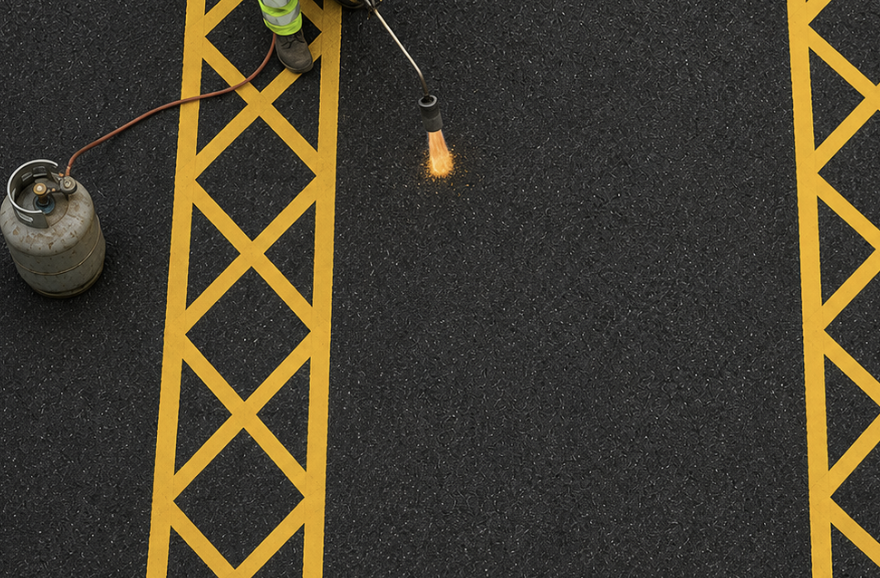
The preformed thermoplastic pieces are laid onto clean asphalt or tarmacAdam and bonded using heat from a gas torch.Once cooled, the markings are ready for traffic, giving contractors and site managers a fast way to install professional disabled bays with minimal closure time.

Why You’ll Love These Thermoplastic Disabled Bay Markings
-
Superior Durability - Thermoplastic materials can last 5 to 10 years as opposed to traditional paints that can wear away quickly
-
Enhanced Visibility - Reflective glass beads improve visibility for drivers in wet, dull and nighttime conditions.
-
Quick Installation - Torch on disabled bay markings are fast to position, heat and complete on site.
-
Anti-Slip Safety - Thermoplastic provides enhanced slip resistance through the use of embedded aggregates, crucial for preventing accidents in wet conditions.
-
Cost-Effective - The higher initial cost is usually offset by reduced repainting, fewer contractor visits and less disruption to parking spaces.
Disabled parking bays are specifically reserved for Blue Badge holders, ensuring they can park close to their destination, and misusing these bays can result in fines or towing of the vehicle.
What Makes Thermoplastic Different from Traditional Paint
Standard paint can fade, flake and lose definition quickly, especially where traffic turns, brakes or parks repeatedly. Thermoplastic parking bay markings are thicker, brighter and heat-bonded for longer service life.
-
Heat-Bonded Durability - Thermoplastic road line markings and symbols bond permanently to asphalt when applied at high temperatures, making them highly resistant to wear and tear.
-
Weather Resistance - The material is designed to cope with heavy traffic, UV exposure and harsh UK weather.
-
Professional Appearance - Yellow disabled bay markings keep a crisp U-shaped outline, and the text ‘DISABLED’ or ‘DISABLED ONLY’ may be included based on local regulations.
-
Immediate Use - Thermoplastic is preferred for disabled parking bays due to its extreme durability, skid resistance, and rapid cooling time after application.
Correct installation of thermoplastic markings requires adherence to strict government and accessibility regulations regarding dimensions and colours. Public road disabled parking spaces must comply with Traffic Signs Regulations and General Directions (TSRGD) in the UK.
How Thermoplastic Disabled Bay Installation Works
-
Surface Preparation
Clean the road, car park or property surface thoroughly. Improper surface conditions, such as the presence of dirt, moisture, or oil, can prevent thermoplastic from bonding correctly during application. -
Heat Application
Position the disabled U-shaped bay thermoplastic markings, then heat evenly with a gas torch until the material softens and flows into the tarmac or asphalt. Heating times depend on wind, weather and surface temperature. -
Glass Bead Application
Apply reflective glass beads while the material is still molten so they embed correctly and support long-term visibility. -
Cooling and Use
Allow the bay to cool fully before opening the parking space to a vehicle. In colder weather, pre-heating the surface may be needed before application to help bonding and prevent edge lift.
Product Specifications and What’s Included
-
Material / Format: Preformed disabled bay markings for car parks, made from road-grade thermoplastic and traffic management supplies with reflective glass beads and anti-slip aggregate.
-
Standard On-Street Dimensions: On-street disabled parking bays must be a minimum of 6.6 metres long and 2.7 metres wide, with a preferred width of 3.6 metres for safer side access.
-
Standard Off-Street Dimensions: Off-street disabled parking bays typically measure 2.4 metres by 4.8 metres, with an additional 1.2 metre side access zone, resulting in an effective width of 3.6 metres.
-
Access Clearance: A 1.2m wide safety hatch zone must be painted along the side and rear of disabled parking bays to ensure wheelchair users have safe clearance.
-
Accessibility Purpose: The recommended dimensions for disabled parking bays are designed to ensure that wheelchair users and those with mobility aids can enter and exit their vehicles without obstruction.
-
Bay Location Guidance: Accessible parking bays should be located ideally within 50 meters of the building entrance on firm, level ground with a slope no steeper than 1:50.
-
Allocation Guidance: Government guidelines recommend that 6% of parking spaces should be allocated to disabled users, unless otherwise set by local planning regulations, to ensure accessibility.
-
Included in the Kit: Yellow U-shaped thermoplastic pieces, reflective glass beads and installation guide, all compatible with our wider range of construction and maintenance products.
-
Storage: Store flat, dry and away from moisture until installed.
Optional Disabled Symbols and Size Variations
This yellow thermoplastic disabled parking bay kit can be supplied with optional wheelchair symbols and wording to suit the location. Bays must display the International Symbol of Access, typically applied in high-contrast yellow or white in the centre of the bay.
Common options include a blue badge symbol, “DISABLED”, “DISABLED ONLY”, “PERMIT HOLDERS ONLY” and custom layouts for wider disabled parking spaces. The outline of disabled bays is typically marked in yellow thermoplastic, subject to local regulations and the legal status of the bay.
For residential requests outside your house, a council may advise whether a disabled parking bay, advisory bay or h bar markings near a driveway or garage are more appropriate.
Who These Markings Are Perfect For
Ideal for users who value high-quality construction and road safety products:
-
Local councils and highway authorities managing street parking and carriageway markings
-
Commercial property owners and facility managers improving access
-
School and hospital car park operators
-
Line marking contractors and road marking specialists
-
Warehouse and industrial site managers with high traffic parking bays
-
Residents, applicants or carers gathering evidence before a council application
To apply for a disabled parking bay, you must hold a Blue Badge and live at the application address with the vehicle used by the disabled person. Eligibility may also involve disability evidence, mobility difficulties or benefits such as Personal Independence Payment.
Frequently Asked Questions
How long do thermoplastic disabled bay markings last?
Thermoplastic disabled bay markings usually last 5 to 10 years when installed correctly. Paint may wear away within a year in busy car parks, making disabled parking bay thermoplastic a better long-term option.
Are these markings compliant with UK standards?
They can be used as part of compliant road markings when installed to the correct dimensions, colours and signage requirements. Public road bays must follow TSRGD, and local council approval may be required before markings are carried out.
What weather conditions are needed for installation?
The surface should be dry, clean and free from oil. Cold conditions may require pre-heating, and wet weather should be avoided.
Can I install these myself or do I need a contractor?
Experienced contractors usually install torch on disabled bay markings because a gas torch, a safe working method and accurate layout are needed. We can advise on the best approach for your location.
Can other drivers use the bay?
Parking in a disabled bay without a valid Blue Badge is illegal in the UK, and penalties can include Penalty Charge Notices (PCNs) and vehicle removal, even in private car parks. Enforcement may involve the council, police or private parking operator, depending on the circumstances. Approval is not a guarantee that a bay is legally enforceable unless the required traffic order or local process has been granted.
Choose Professional-Grade Thermoplastic for Lasting Results
Choose a thermoplastic disabled bay kit when you need a clean, durable and visible parking bay that stands up to daily use. With heat-bonded yellow markings, reflective beads, anti-slip performance and rapid cooling after installation, it is a practical upgrade from paint for UK roads, car parks and commercial property.
Contact us to request product details, pay for an order, check coverage, or get advice before you complete your next disabled parking bay application or installation project.