


Disabled L-Shaped Bay Markings Yellow
Place an order from us to Get your supply direct from the UK source, cutting out unnecessary costs and passing the savings directly to you. Need help or looking for bulk quantities? Give us a call we’re always happy to help.
Couldn't load pickup availability
Follow us on social
What Are Disabled L - Shaped bays use for.
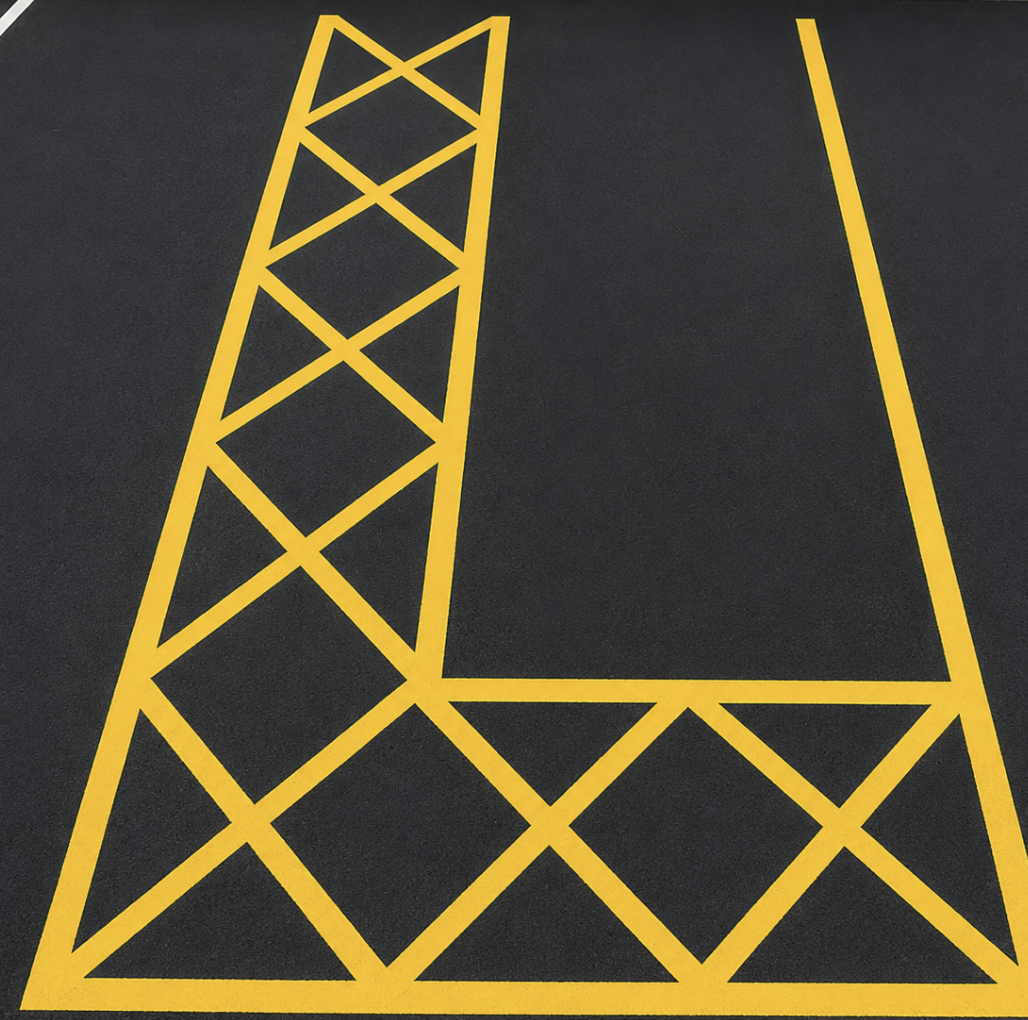
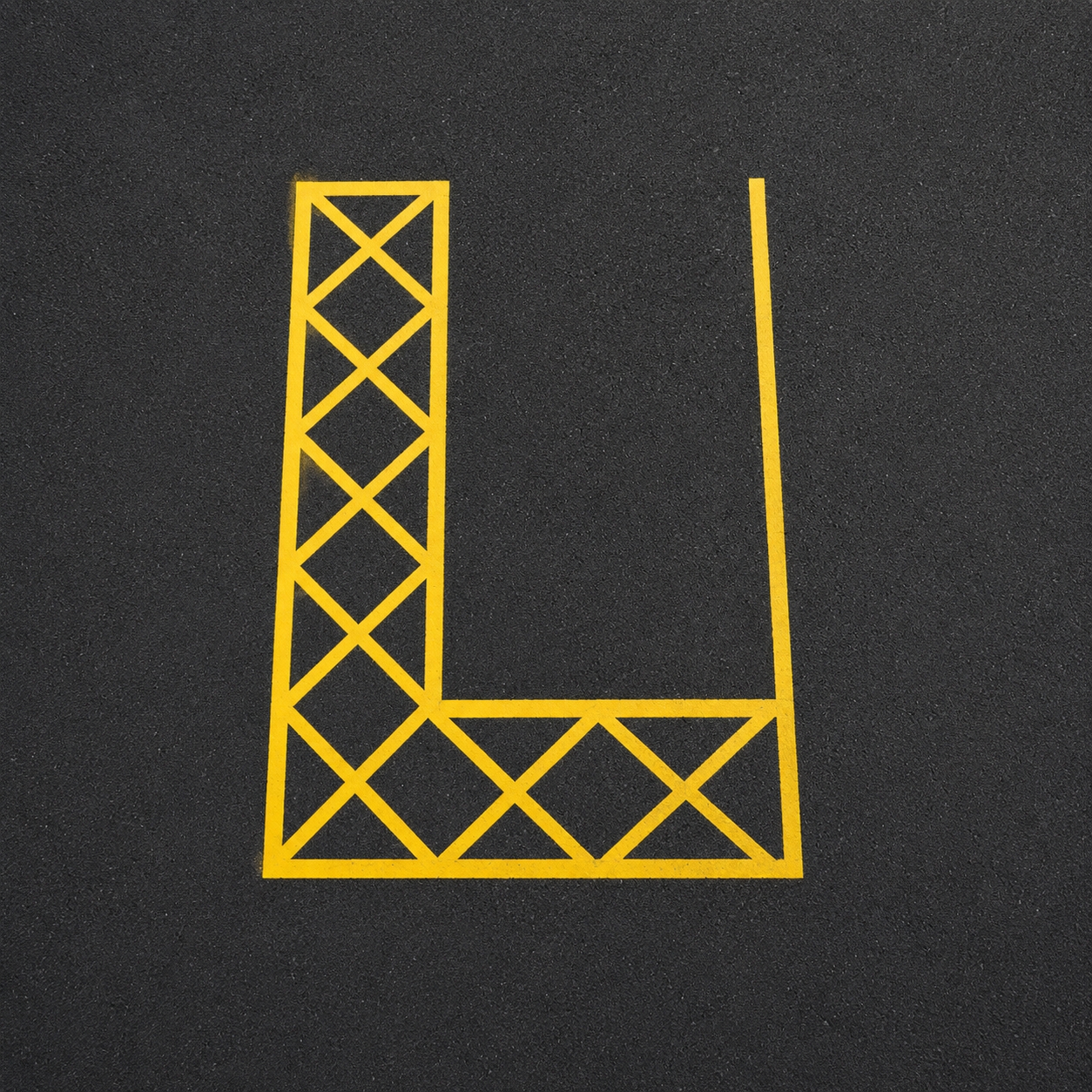
Disabled L-shaped bay thermoplastic markings create a clearly defined disabled parking bay with an integrated access zone along one side and the rear of the vehicle. This disabled l shaped bay layout gives wheelchair users, drivers with mobility difficulties and people using mobility aids enough room to open doors fully, deploy ramps or hoists, and move safely without stepping into traffic or obstructing pedestrians.
We regularly supply thermoplastic disabled bay markings for car parks, private developments and commercial sites across the UK. These disabled parking space markings are commonly used in off street parking, street parking, hospital car parks, retail sites, residential developments, council-approved bays and commercial parking spaces where accessibility, visibility and durability matter.
Thermoplastic is preferred over traditional paint because it forms a thicker, tougher marking that bonds directly to asphalt and tarmac. Paint can fade, peel and require repainting within 6–18 months, while preformed thermoplastic line markingcan typically last 3–10 years, depending on location, traffic, surface condition and regular inspections.
Disabled L-Shaped Bay Thermoplastic Markings
Fast installation with long-lasting performance for disabled parking areas
Our thermoplastic markings are designed for fast installation and strong adhesion to asphalt and tarmac surfaces. A preformed thermoplastic disabled bay can be positioned on site and installed using a propane torch, with cold surfaces pre-heated where needed. The result is a highly visible, professional disabled parking bay kit suitable for contractors, councils and facilities management teams.
Providing properly designed L-shaped bays is a necessary reasonable adjustment under the Equality Act 2010. For regulatory guidance conforming to UK standards, refer to the UK Government Inclusive Mobility Guidelines or the Equality Act 2010.
Why You’ll Love Thermoplastic Disabled Bay Markings
-
Fast Torch-On Installation – Torch on disabled bay markings reduce downtime because the preformed thermoplastic disabled bay is supplied ready to position, heat and bond. This keeps the application process efficient for contractors, council teams and facilities managers working around live parking areas.
-
Long-Lasting Durability – A thermoplastic disabled bay withstands weather, tyre wear and regular vehicle movement far better than paint. Lifespan can vary depending on the surface, traffic flow and maintenance, but thermoplastic road line markings and symbols are a stronger long-term choice for busy car parks and access routes.
-
High Visibility Yellow Finish – Yellow disabled bay markings give maximum visibility in private car parks, commercial sites and advisory bays. A high-contrast yellow or white boundary, paired with the International Symbol of Accessibility and a wheelchair symbol, helps other drivers identify designated spaces quickly.
-
Strong Surface Adhesion – Thermoplastic bonds directly to asphalt and tarmac when heated, creating a durable finish that resists lifting when the surface is clean, dry and structurally sound. Concrete can also be suitable when properly prepared with primer where required.
-
Cost-Effective Solution – Although the initial cost is higher than simple paint, fewer repainting cycles reduce long-term maintenance costs. The application fee for a disabled parking bay can vary by location, with some councils charging around £110.00, while others may charge up to £220.00 for the installation of road markings. In some areas, the cost for repainting existing disabled parking bay markings can be around £171, but this fee may also vary depending on local council policies.
Disabled parking bays are specifically reserved for Blue Badge holders, ensuring they can park close to their destination to facilitate easier access. Bays for accessible parking should be located on firm, level ground, ideally within 50 m of the main building entrance.
What Makes Them Different
Most traditional bay markings rely on paint, which is thinner and more vulnerable to abrasion, UV fading, water damage and tyre shear. Over time, faded markings make it harder for road users, other drivers and pedestrians to recognise accessible parking spaces, increasing the risk of misuse and reducing safe access.
Thermoplastic is a stronger alternative because it is heated until molten and bonded into the surface. It is commonly manufactured to road-grade standards, with UV-stable pigments, glass beads for visibility, and slip-resistant additives where specified, making it suitable for a wide range of reinstatement road repair products. This makes a thermoplastic disabled parking bay kit UK a practical option where clear markings and long service life are needed.
Disabled L-Shaped Bay Thermoplastic Markings are built differently:
-
Preformed Thermoplastic Design – The disabled parking bay kit is supplied as a ready-to-apply set, helping eliminate complex measuring and shaping on site. The L-shaped bay boundary includes a hatched access zone running along one side and the rear of the vehicle.
-
Professional-Grade Materials – Road-grade thermoplastic is designed for UK conditions and is suitable for disabled bay markings, parking bay markings, bay markings, h markings and other specialist road markings where strong visibility is required.
-
Instant Bond Technology – Heat activation creates immediate adhesion to the surface once the material cools. The bottom leg of the L-shaped hatch creates a buffer zone at the rear, allowing ramps to deploy safely, while the side access zone allows room to fully open car doors and deploy wheelchair ramps or hoists.
An accessible parking space includes both a standard car parking space and an adjoining access aisle. The L-shaped bay acts as a safety shield, providing a dedicated environment for individuals with slower mobility to organize equipment. This layout resolves spatial barriers faced by motorists with limited mobility and must prioritise spatial allowance, ease of movement, and unobstructed access.
How Installation Works
-
Surface Preparation
The area is cleaned to remove dust, loose material, oil and contamination. Surfaces must be dry, and cold or damp areas should be pre-heated before application. A primer may be advised for smooth concrete, aged asphalt or surfaces where adhesion could be reduced. -
Torch-On Application
The preformed thermoplastic disabled bay is laid into position, including the L-shaped hatch, parking bay boundary, wheelchair symbol and “DISABLED” legend where specified. The material is then heated using a propane torch until it softens, flows and bonds directly into the asphalt or tarmac surface. -
Immediate Use
Once the thermoplastic has cooled, the markings are typically ready for traffic within minutes. This makes them suitable for active car parks, roads, commercial sites and parking areas where closures need to be kept short.
Correct installation matters. Poor preparation, damp surfaces or uneven heating can lead to lifting, cracking or discolouration. Regular inspections help identify fading, damage or wear before the bay loses visibility or access function.
Product Details
-
Material / Format: Preformed thermoplastic disabled bay markings manufactured from road-grade thermoplastic with UV-stable pigment and optional glass beads for reflectivity and slip resistance.
-
Dimensions / Specs: The standard size for a disabled parking bay is 2.4 m × 4.8 m, and the effective minimum footprint for an L-shaped bay is 3.6 m × 6.0 m. On-street disabled parking bays must be a minimum of 6.6 metres long and 2.7 metres wide, with a preferred width of 3.6 metres for safer side access. Off-street disabled parking bays typically measure 2.4 metres wide by 4.8 metres long, with an additional 1.2 metre side access zone recommended for wheelchair users. An L-shaped bay expands a standard parking footprint by incorporating a 1.2-metre-wide hatched boundary.
-
Access Zone: Disabled parking bays should include a hatched area alongside or behind the space, typically marked in yellow or white, to provide extra room for wheelchair access. A disabled-friendly L-shaped bay features an integrated, L-shaped hatched access zone running along one side and the rear of the vehicle.
-
Compatibility: Suitable for asphalt and tarmac surfaces, with concrete compatibility subject to surface condition and primer use. Firm, level ground is recommended for accessible bays, especially near a dropped kerb, entrance route or main building access point.
-
Included in the Kit: Boundary lines, L-shaped hatched sections, wheelchair symbol, “DISABLED” lettering where required, installation guidance and optional reflective or anti-slip bead depending on specification.
-
Standards / Guidance: For regulatory guidance conforming to UK standards, refer to the UK Government Inclusive Mobility Guidelines or the Equality Act 2010. Signage for accessible bays should clearly display the international wheelchair symbol. The L-shaped bay boundary is typically painted in high-contrast yellow or white, paired with the International Symbol of Accessibility.
-
Lifespan / Guarantee: Thermoplastic markings typically provide 3–10 years of performance depending on location, traffic, surface quality and installation standard. Guarantees vary by supplier and project conditions, but professional installation delivers a more durable finish than paint.
-
Accessibility Context: High-traction, slip-resistant flooring is required to prevent falls in accessible areas. Emergency pull-cord alarm systems that reach floor level are mandatory in disabled washrooms, showing how accessible parking, internal routes and welfare facilities should work together as part of a complete accessibility plan.
Parking in a disabled bay without a valid Blue Badge is illegal in the UK, and penalties can include Penalty Charge Notices (PCNs) and vehicle removal. Misusing a disabled parking bay can result in fines and, in some cases, the vehicle being towed.
Who It’s For
Ideal for:
-
Road marking contractors and surfacing specialists needing a fast, reliable thermoplastic disabled parking bay kit UK for professional installation from a specialist construction and road safety supplier.
-
Local councils and highway authorities managing disabled bays, street parking, highway markings, legal requirements and requests from residents.
-
Facilities management teams for commercial sites responsible for accessible parking, clear markings, designated spaces and safe access routes.
-
Property developers and car park operators planning disabled parking spaces for new developments, retail parks, offices, healthcare sites and shared-use car parks.
-
Anyone requiring durable, professional disabled bay markings for a property, private car park, house frontage, driveway access area or approved parking bay.
To apply for a disabled parking bay, you must complete an application form, which can often be submitted online through your local council’s website. Applicants for a disabled parking bay must hold a Blue Badge and provide evidence that both the Blue Badge holder and the vehicle keeper reside at the application address.
The application process for a disabled parking bay can take up to 12 weeks for processing, followed by an additional period for the installation of road markings if approved. Disabled parking bay application fees are typically non-refundable, meaning that if an application is unsuccessful, the applicant will not receive their payment back.
Some applicants may also receive support through benefits such as personal independence payment, disability living allowance or attendance allowance, although eligibility for a Blue Badge and approval for a bay remain subject to council rules. Most on-street disabled bays are advisory and not legally enforceable, but misuse can still lead to complaints or local enforcement actions. Off-street disabled parking bays are legally enforceable and must meet strict accessibility standards, with clear markings and signage to prevent misuse.
H bar markings and h markings are different from disabled parking bay markings. They are often used to keep access clear across a driveway or dropped kerb, but they do not provide the same legal status or accessible parking function as a specifically reserved disabled parking bay.
If you need a durable, highly visible and accessible parking solution, this product fits your needs.
Frequently Asked Questions
What are disabled L-shaped bay markings?
Disabled L-shaped bay markings define a disabled parking space with an access aisle along one side and behind the vehicle. The layout provides extra room for wheelchair users, mobility aids, ramps, hoists and safer movement around the car. The bay usually includes clear markings, a hatched area, the wheelchair symbol and, where specified, the word “DISABLED”.
Are thermoplastic disabled bay markings better than paint?
Yes. Thermoplastic disabled bay markings are thicker, more durable and more weather-resistant than traditional paint. Paint may need repainting after 6–18 months, while thermoplastic can last 3–10 years depending on traffic, location and maintenance. Thermoplastic also offers stronger visibility, better adhesion and reduced long-term cost.
How are thermoplastic disabled parking bays installed?
The surface is cleaned, dried and pre-heated if cold or damp. The preformed thermoplastic sections are positioned on the parking bay, then heated with a propane torch until the material melts and bonds into the surface. Once cooled, the bay can usually be used within minutes. Professional installation helps ensure the markings remain durable, visible and suitable for road users.
Where can these markings be used?
They can be used in car parks, off street parking, private developments, retail sites, hospitals, schools, workplaces, council-approved spaces and suitable street parking locations. They are suitable for asphalt and tarmac, and may be installed on concrete when the surface is properly prepared. For public highway use, always check council approval, signs, legal status and local enforcement rules before installation.
Do disabled bays need signage?
Yes, accessible bays should be supported by clear signs, especially where the bay is intended to be legally enforceable. Signage should clearly display the international wheelchair symbol and help other drivers understand that the space is specifically reserved for Blue Badge holders.
Can drivers park in a disabled bay without a Blue Badge?
Parking in a disabled bay without a valid Blue Badge is illegal in the UK, and penalties can include fines and vehicle removal. Enforcement can vary depending on whether the bay is advisory, council-controlled, on-street, off-street or privately managed, but misuse should never be treated as acceptable.
Choose Durable Thermoplastic for Long-Term Performance
Stop relying on paint that fades quickly and needs frequent maintenance. Choose Disabled L-Shaped Bay Thermoplastic Markings for a fast-installed, highly visible and long-lasting disabled parking bay solution.
A preformed thermoplastic disabled bay gives contractors, councils and facilities teams a practical way to create clear, accessible and professional disabled bays with strong adhesion to asphalt and tarmac. The high-visibility finish helps drivers, pedestrians and other road users recognise the space, while the L-shaped access zone supports safer movement for wheelchair users and people with mobility difficulties.
For durable disabled bay road markings UK, choose thermoplastic markings designed for long-term performance, visibility and reliable access.
Professional supply. Fast installation. Long-lasting visibility.